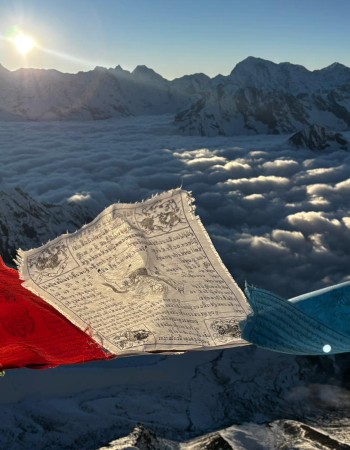
Everest Base Camp Trek

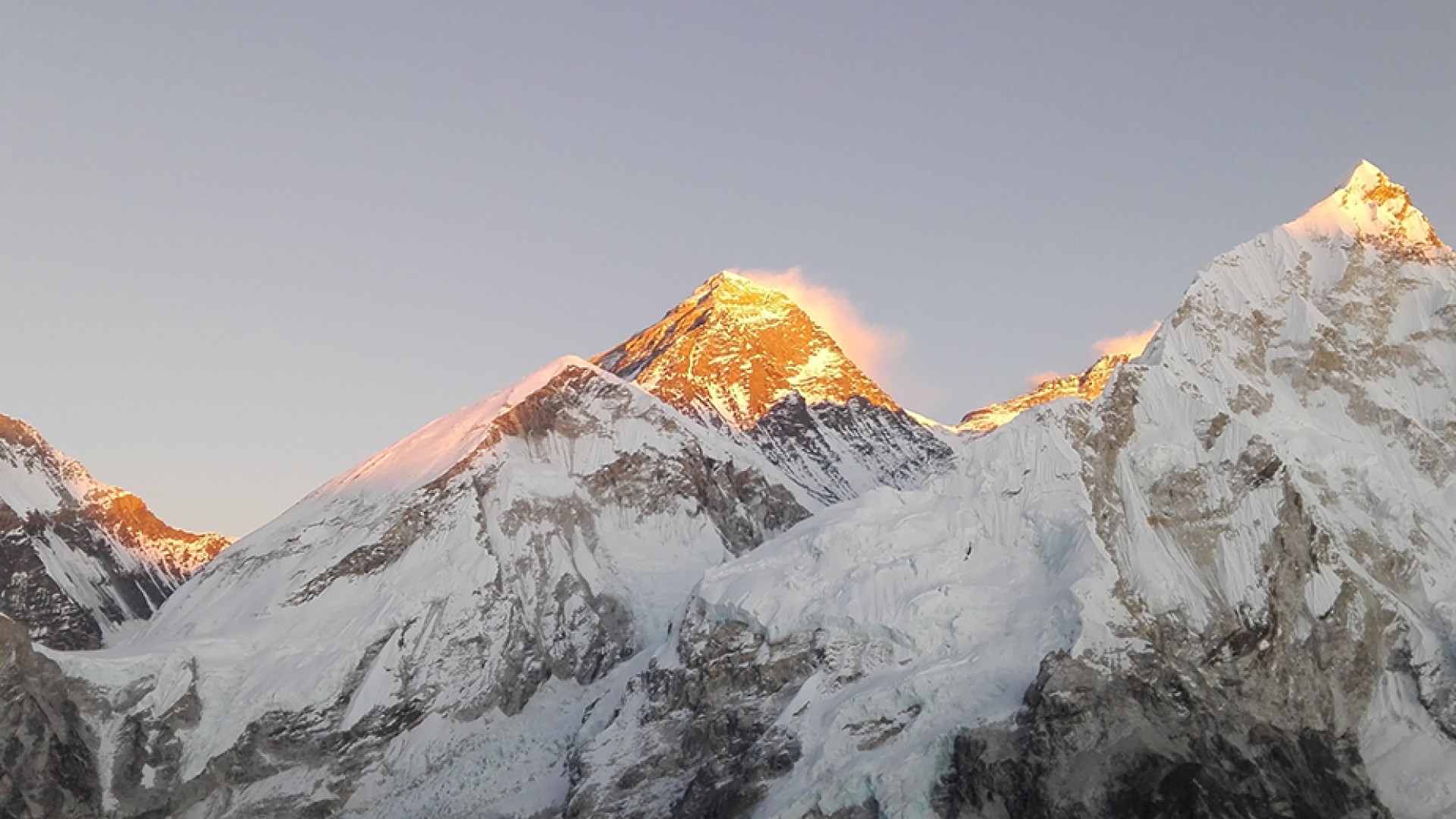
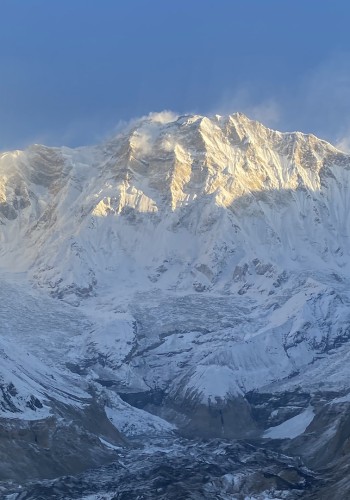
The Everest Base Camp Trek is one of the world’s most iconic Himalayan adventures, offering an unforgettable journey to the base of Mount Everest (8,848.86 m), the highest mountain on Earth. This legendary trek takes travelers through the beautiful Khumbu region of Nepal, passing traditional Sherpa villages, ancient monasteries, suspension bridges, and breathtaking mountain landscapes. Trekkers enjoy spectacular views of Everest, Lhotse, Nuptse, Ama Dablam, and many other snow-capped Himalayan peaks while experiencing the rich Sherpa culture and warm local hospitality. The journey begins with a scenic flight to Lukla and continues through famous villages such as Namche Bazaar, Tengboche, Dingboche, and Lobuche before reaching Everest Base Camp at 5,364 meters. Another major highlight is the sunrise hike to Kala Patthar (5,545 m), the best viewpoint for panoramic views of Mount Everest and the surrounding Himalayas. The trek combines adventure, culture, and natural beauty, making it one of the best trekking experiences in Nepal and the world. Organized by Nepal New Generation Trek & Adventure Pvt. Ltd. , the Everest Base Camp Trek is carefully designed with experienced guides, proper acclimatization days, reliable services, and a strong focus on safety and customer satisfaction to provide travelers with a memorable Himalayan adventure.

The Everest Base Camp Trek is one of the world’s most famous and life-changing Himalayan adventures, offering trekkers the extraordinary opportunity to stand at the base of Mount Everest (8,848.86 m), the highest mountain on Earth. Organized by Nepal New Generation Trek & Adventure Pvt. Ltd., a trusted and experienced trekking, tour, and mountain climbing company in Nepal, this unforgettable journey combines breathtaking Himalayan landscapes, rich Sherpa culture, ancient Buddhist traditions, and thrilling high-altitude adventure.

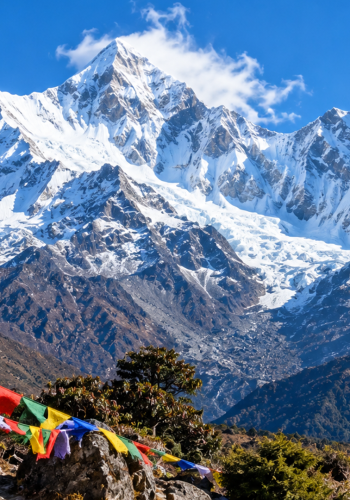
The Everest Base Camp Trek begins with a scenic mountain flight from Kathmandu to Lukla, the gateway to the Khumbu region. The dramatic flight itself offers incredible aerial views of the Himalayas and introduces travelers to the beauty of the Everest region. After landing in Lukla, the trekking journey officially starts through picturesque Sherpa villages, suspension bridges decorated with colorful prayer flags, and beautiful forests of rhododendron and pine. The trail follows the Dudh Koshi River while gradually ascending toward the heart of the Everest region.

As trekkers move deeper into the Khumbu Valley, they pass through traditional mountain villages such as Phakding, Namche Bazaar, Tengboche, Dingboche, Lobuche, and Gorak Shep. These villages offer a unique insight into the lifestyle, traditions, hospitality, and culture of the Sherpa people, who are globally respected for their mountaineering skills and resilience in the high Himalayas. The Everest region is not only famous for its mountains but also for its spiritual atmosphere reflected in monasteries, mani walls, prayer wheels, chortens, and fluttering Buddhist prayer flags found throughout the trail.

One of the major highlights of the Everest Base Camp Trek is Namche Bazaar, the vibrant Sherpa capital and trading center of the Khumbu region. Trekkers spend an acclimatization day here to adjust to the altitude while exploring the lively market, local bakeries, mountain cafes, and the famous Sherpa Museum. The museum preserves the inspiring history of Everest expeditions and showcases the achievements of legendary climbers, including Sir Edmund Hillary and Tenzing Norgay Sherpa, who first summited Mount Everest in 1953.

Another unforgettable destination along the route is Tengboche Monastery, the largest and most important Buddhist monastery in the Everest region. Surrounded by spectacular Himalayan peaks such as Everest, Ama Dablam, Lhotse, and Nuptse, the monastery offers a peaceful spiritual experience in the middle of the mountains. Trekkers often describe Tengboche as one of the most beautiful and serene places in the Himalayas.

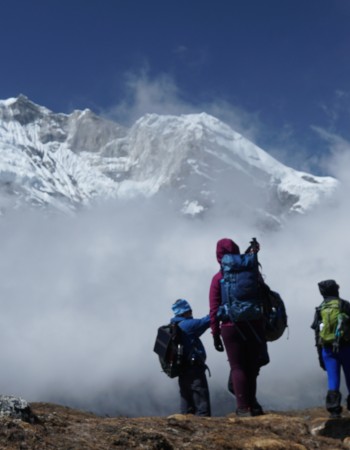
As the trek ascends above the tree line, the landscape transforms into rugged alpine terrain, glaciers, and rocky mountain paths. The air becomes thinner, and the Himalayan scenery becomes increasingly dramatic. The ultimate goal of the trek is reaching Everest Base Camp at 5,364 meters, where climbers prepare for expeditions to the summit of Everest. Standing at the base of the world’s tallest mountain surrounded by glaciers and the famous Khumbu Icefall is an emotional and unforgettable achievement for every trekker.

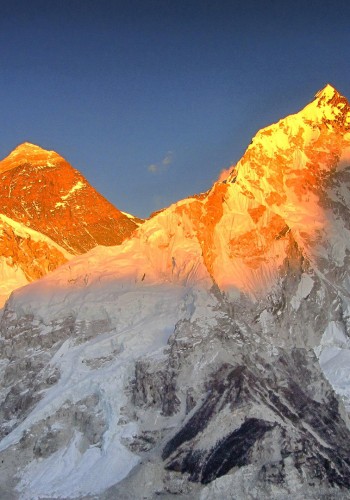
Another major highlight of the journey is the early morning hike to Kala Patthar (5,545 m), considered the best viewpoint in the Everest region. From Kala Patthar, trekkers witness a breathtaking sunrise over Mount Everest along with panoramic views of surrounding Himalayan giants including Pumori, Nuptse, Lhotse, and Ama Dablam. The golden light touching the snow-covered peaks creates one of the most magical moments of the entire trek.

The Everest Base Camp Trek is carefully designed with proper acclimatization days to minimize the risk of altitude sickness and ensure a safe and enjoyable trekking experience. The trek is suitable for travelers with good physical fitness, determination, and a passion for adventure. Tea houses and lodges along the route provide comfortable accommodation, warm meals, and friendly hospitality throughout the journey.

Nepal New Generation Trek & Adventure Pvt. Ltd. is recognized as one of Nepal’s experienced and professionally organized trekking, tour, and mountain climbing companies, offering reliable services, experienced government-licensed guides, professional Sherpa staff, carefully planned itineraries, and a strong commitment to safety and customer satisfaction. Their Everest Base Camp Trek packages are designed to provide travelers with an authentic Himalayan adventure while ensuring comfort, safety, and unforgettable memories.

The best seasons for the Everest Base Camp Trek are spring (March to May) and autumn (September to November), when the weather is stable, skies are clear, and the mountain views are at their finest. During these months, trekkers can enjoy crystal-clear views of the Himalayas, pleasant trekking temperatures, and excellent trail conditions.

For adventure seekers, mountain lovers, photographers, and cultural explorers, the Everest Base Camp Trek with Nepal New Generation Trek & Adventure Pvt. Ltd. offers a truly unforgettable Himalayan experience. This legendary journey combines natural beauty, cultural richness, personal achievement, and the thrill of trekking beneath the world’s highest mountain, creating memories that last a lifetime.

Region
Nepal
Duration
16 Days /15 Nights
Level
moderate
Max Altitude
5550 m
Daily Activity
6-7 hours
Season
Sept to Nov and Mar to May
Starting From
$ 1925
Nepal New Generation Trek offer this cost more then 4 people
Brief Introduction

The Everest Base Camp Trek is one of the most iconic and life-changing trekking adventures in the world, leading travelers to the base of Mount Everest (8,848.86 m), the highest mountain on Earth. Organized by Nepal New Generation Trek & Adventure Pvt. Ltd., an experienced trekking, tour, and mountain climbing company in Nepal, this journey offers a perfect combination of Himalayan adventure, Sherpa culture, natural beauty, and spiritual experience in the heart of the Khumbu region.

This legendary trek takes you through the beautiful landscapes of Sagarmatha National Park, a UNESCO World Heritage Site, where trekkers walk along scenic trails, cross suspension bridges, and pass through traditional Sherpa villages like Lukla, Namche Bazaar, Tengboche, Dingboche, and Lobuche.

The journey begins with a thrilling flight to Lukla, followed by days of trekking through alpine forests, glacial valleys, and high mountain terrain surrounded by stunning peaks such as Everest, Lhotse, Nuptse, and Ama Dablam.

A highlight of the trek is reaching Everest Base Camp at 5,364 meters and hiking to Kala Patthar (5,545 m), one of the best viewpoints for panoramic sunrise views of Mount Everest and the surrounding Himalayas.

With carefully designed itineraries, experienced Sherpa guides, proper acclimatization, and strong safety management, Nepal New Generation Trek ensures a well-organized and memorable Himalayan experience for trekkers from around the world.

The Everest Base Camp Trek is not just a journey to the base of the world’s highest mountain—it is an adventure that combines nature, culture, and personal achievement, making it one of the best trekking experiences in Nepal and the world.

Highlight Title – Everest Base Camp Trek

Namche Bazaar – Sherpa Capital

A vibrant mountain town and major acclimatization stop, offering panoramic views, local markets, bakeries, and cultural insight into the Sherpa lifestyle.

Tengboche Monastery

The most famous monastery in the Everest region, surrounded by stunning peaks like Ama Dablam, Everest, and Lhotse, offering a peaceful spiritual experience.

 Sagarmatha National Park (UNESCO Site)

A world heritage trekking route filled with alpine forests, rivers, glaciers, and rare Himalayan wildlife, making the journey naturally diverse and scenic.

 Everest Base Camp (5,364 m)

The ultimate destination of the trek, where climbers prepare for Everest expeditions, surrounded by glaciers and the famous Khumbu Icefall.

 Kala Patthar Viewpoint (5,545 m)

The best viewpoint of the entire trek, offering a breathtaking sunrise panorama of Mount Everest and surrounding Himalayan giants like Nuptse and Lhotse.

 Sherpa Culture & Heritage

Experience traditional Sherpa villages, Buddhist monasteries, prayer flags, mani walls, and warm Himalayan hospitality throughout the journey.

 Safe & Well-Organized Trek

With proper acclimatization, experienced guides, and professional management by Nepal New Generation Trek, the trek ensures safety, comfort, and a well-organized Himalayan adventure.

 Final Experience

The Everest Base Camp Trek is not just a trekking route—it is a life-changing Himalayan experience combining adventure, culture, spirituality, and natural beauty. With Nepal New Generation Trek & Adventure Pvt. Ltd., travelers enjoy a professionally organized journey that guarantees unforgettable memories in the shadow of the world’s highest mountain.

Itinerary

Seeking for a real adventure? Our travel itinerary is based on years of trekking expertise, ensuring that you have a fun and safe vacation. However, like with all such risky excursions, there may be instances where we must change the schedule, possibly without much notice. While we make every attempt to stick to the timetable, we humbly ask for your patience and flexibility if unforeseen circumstances like weather or unforeseen natural events come into play. You may be sure that our knowledgeable guides will adjust as needed to make your tour as enjoyable as possible.

Schedule for each day
Days: 1 Arrive in Kathmandu (1,400 m)  
Our airport representative will be receiving you at Tribhuvan International Airport, Kathmandu and s/he will be displaying an Nepal New Generation Trek signboard outside the airport terminal. You will be then transferred to your respective hotel in our private tourist vehicle. Note: If you happen to arrive after 4 pm you would be briefed about the trip by our guide, this will be the pre-trip meeting for you, so please make sure that you ask all the questions. But if you arrive earlier than 4 pm, your pre-trip meeting would be on that very day at our office. During the meeting, we will introduce your trek leader/guide. For the meeting, please make sure you bring the passport, three copies of passport-size photos and a readable copy of your travel insurance policy. During this meeting, please clear the due balance, if any, and sign the legally binding trip form as well as the non-liability disclaimer. Overnight at a hotel. No meals included.
Days: 2 Guided Sightseeing in the Kathmandu Valley  
After a hearty breakfast, at 8.30 am your sightseeing trip will start. You will have a private vehicle and a professional tour guide at your disposal. Today we will visit some heritages listed below: Boudhanath Stupa: Boudhananath is one of the holiest Buddhist sites in Kathmandu. It was built in the 5th century with four pairs of eyes of Lord Buddha in four cardinal directions keeping an eternal watch over the people and their doings. You will find Buddhist pilgrims from Tibet going round the stupa spinning the prayer wheels.
Days: 3 Fly to Lukla and Trek to Phakding (2652m/8699ft (Walking Distance: 8 KM) Duration: 3 hours  
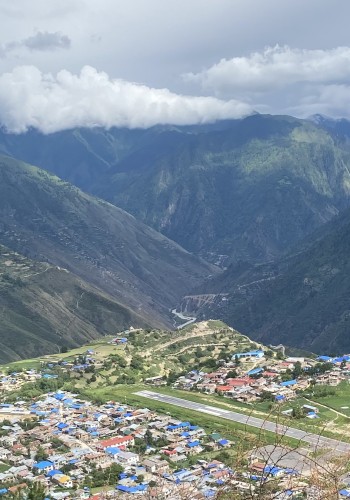
From Kathmandu, a flight to Lukla commences the trek. The Lukla flight is one of the most dramatic short flights in the world. The Lukla Airport itself is located on a hill and contains a single runway that drops off towards its end to the deep gaping valley below. Surrounded by tall mountains and jaded hills, the airstrip at Lukla is quite fascinating and the flight is deemed as a little thrilling adventure in itself. Upon arriving at Lukla, the change in the scenery is immediately felt. The mountainous landscape becomes quite prominent and the air carries a crisp freshness to it that only Himalayan atmosphere carries. From Lukla, the trekking trail slowly moves towards the Cheplung Village. View of the sacred Mount Khumbila from the village at Cheplung is beautiful. From there, a gradual walk downwards leads to the village of Phakding. The terrain is amazing and tall hills surround the trail like giant mounds of emeralds. From Phakding, the sight of the Kusum Kangraru Mountain can be seen. The village of Phakding lies in the Dudh Koshi River valley north of Lukla and contains many guesthouses and lodges that cater to tourism and trekkers. Overnight stay at the Guesthouse. Meals: Breakfast, Lunch and Dinner included.
Days: 4 Phakding to Namche Bazaar (3440m/11283ft) (Walking Distance: 10-12 KM) Duration: 6 hours  
After breakfast at Phakding, the trail further opens out to reach the celebrated mountain town of Namche Bazaar. En route to Namche, several smaller villages are crossed, like Jorsale and Monjo. Monjo lies north of Phakding and is the entry point of the Sagarmatha National Park. The trail ventures through the national park and finally arrives at Namche. Walking along the trekking route through the Sagarmatha National Park presents many virtues, like its alpine woods, small rivers and brooks and deciduous forests. Thick acreages of Pine and Cedar cover the lands and provide a pleasant atmosphere to trek through. Namche Bazaar, because of its strategic location, is the commercial hub of the Khumbu region. It is located on a mountain side and views of the Thamserku Peak and the Kongdi RI Himal from here are amazing. Overnight stay at the Guesthouse. Meals: Breakfast, Lunch and Dinner included.
Days: 5 Acclimatization Day - Hike to Everest View Hotel (Walking Distance: 3-4 KM) Duration: 3-4 Hours  
Namche is a great place to acclimatize. The sights around Namche are spectacular and beautiful. After breakfast, you can visit the Syangboche Airstrip that lies on a hill above the town. From here, you can get panoramic view of Namche and can see amazing sights of the Himalayas as well. Further from Namche lies the Everest View Hotel. The hotel is the highest located hotel in the world and provides view of Mount Everest and many other Himalayan peaks from all of its windows. Back at Namche, you can visit the Everest Photo Gallery and the Sherpa Culture Museum as well. Overnight stay at the Guesthouse. Meals: Breakfast, Lunch and Dinner included.
Days: 6 Namche to Tengboche (3860m/12660ft) (Walking Distance: 10-11 KM) Duration: 5 Hours  
An easy trail from Namche opens out towards the Dudh Koshi Valley at the settlement of Phungki Thanka. From the settlement, the views of Mount Everest are magnificent. Following the trail that marches along the right side of the Dudh Koshi River, the village of Tengboche is reached. The journey from Namche to Tengboche is filled with amazing natural scenery of rivers, hills and Himalayan peaks. The village of Tengboche is located at the confluence of the Dudh Koshi and the Imja Khola Rivers and is surrounded by tall hills that are covered in rhododendron trees. The village is also famous for Tengboche Monastery, the largest monastery of the Khumbu region. The monastery is a hamlet from where the sight of Mount Ama Dablam, Mount Everest and numerous other peaks are beautiful to look at. The Tengboche Monastery is also regarded as the spiritual hub of the Khumbu region and is surrounded by forests that are inhabited by Impeyan Pheasants and eagles. Overnight stay at the Guesthouse. Meals: Breakfast, Lunch and Dinner included.
Days: 7 Day 07 - Tengboche to Dingboche (4410m/14464ft) (Walking Distance: 11-12 KM) Duration: 5 Hours  
The trekking trail crosses the Imja River via a suspension bride and moves towards the village of Dingboche. Along the way, the village of Pangboche is passed. Dingboche is called the “Summer Valley” of the Khumbu and contains a kilometer long wall built to protect the village’s crops from the cold winds that descends down the Imja Valley. Dingboche, as the name reflects, receives more sun too. Graceful views of Lhotse, the Ama Dablam and the Island Peak from Dingboche are quite amazing. Overnight stay at the Guesthouse. Meals: Breakfast, Lunch and Dinner included
Days: 8 Acclimatization Day - Hike to Nagerjun and return (Walking Distance: 5-6 KM) Duration: 4-5 Hours  
Dingboche is also a great village for acclimatizing. A hike to Nagerjun is a great way to spend time at Dingboche. Nagerjun is located at the height of 5100 meters and lies just above Dingboche on a hill at the edges of the Chhukung valley. The hike is uphill and steep, and requires a bit of a strenuous energy. Walking for approximately 3-4 hours, we will reach Nagerjun from where marvelous panorama of Lobuche East (6119m), Lobuche West (6145m), Kangtega (6685m), Taboche Peak (6367m), Thamserku (6608m), and the Ama Dablam (6856m) can be seen. If you are lucky, you can also spot stunning sights of Mount Makalu, the world’s fifth tallest peak on a clear day. The view of the Pheriche Valley from here is also splendid. Returning back to Dingboche is also very beautiful. After finishing our lunch, we can take a rejuvenating sunbath and relax at the village. Overnight stay at the Guesthouse. Meals: Breakfast, Lunch and Dinner included.
Days: 9 Dingboche to Lobuche (4910m/16105ft) (Walking Distance.: 11-12 KM) Duration: 5 Hours  
Making our way to Dhungla from Dingboche, you will come across the Trekkers Aid Post- situated at Pheriche (4210m). It is run by the Western Volunteer Doctors and assisted by The Himalayan Rescue Association. The aid post helps in the treatment of trekkers. The Chupki Lhara is then reached. It is a rock-strewn oblique from where sight of magisterial mountains can be seen. The path follows further down to the Khumbu Glacier moraine from there. The views of mountain peaks like Khumbutse, the Mahalangur Himal, Lingtren and the Pumori from the moraine are amazing. Mount Nuptse also looms up ahead once the glacier pass is crossed. We shall then check into our guesthouse at Lobuche for the night. Overnight stay at the Guesthouse. Meals: Breakfast, Lunch and Dinner included.
Days: 10 Lobuche - Everest Base Camp (5364m/17594ft) - Gorekshep (Distance: 14-15 KM) 8 Hours  
An anticipated day of the trip, it will commence with a slow walk. Avoiding altitude sickness, a slow walk further on from Lobuche runs alongside the sight of the world’s highest glacier- the Khumbu Glacier, to the right. Walking for about 2-3 hours from Lobuche, we will get to Gorakshep (5181m/16994ft), a tranquil location dotted with some lodges. From here, the path moves all the way to the top of the edge, finally arriving at the Everest Base Camp. Here, the sight of the Khumbu Icefall and the view of the Khumbutse and Lingtren mountains are quite heavenly. After spending some time at the base camp enjoying the sights and the environment, we shall return back to Gorakshep. Overnight stay at the Guesthouse. Meals: Breakfast, Lunch and Dinner included.
Days: 11 Gorakshep - Kala Pathar (5545m/18188ft) - Pheriche (4210m) (Distance: 13-14 KM) 7 Hours  
An early morning hike to Kalapatthar from Gorakshep is another highlight of the trip. Kalapatthar is a famous vantage point popular for providing panoramic views of Mount Everest, Nuptse, Chagatse, Lhotse and the Pumori among many other peaks. Hike to Kalapatthar is done early at dawn because the sight of the rising sun seen from the vantage point is absolutely amazing. The sun rises from amidst the Mount Everest Mountains and it changes the color of the mountains from silver to gold. After spending time at Kalapatthar, we will return to Gorakshep and walk down to Pheriche. Overnight stay at the Guesthouse. Meals: Breakfast, Lunch and Dinner included.
Days: 12 Pheriche to Namche (3440m/11283ft) (Walking Distance: 16-17 KM)Duration: 7 Hours  
The trail follows the Imja River again all the way to Tengboche. From Tengboche, we will move down towards Phungki Thanka, pass the Kyangjuma and reach Namche. It is a relaxing hike back and the sight of the landscape and the Himalayas can be enjoyed pleasantly. The villages are also lively with people and you can observe their customs and activities as you pass through. Overnight stay at the Guesthouse. Meals: Breakfast, Lunch and Dinner included.
Days: 13 Namche to Lukla (2800m/9184ft) (Walking Distance: 18-19 KM) Duration: 7 Hours  
The hike back to Lukla follows a trail that moves steeply downwards and crosses a suspension bridge. Chortens, prayer flags, Mani-stone walls and small Gompas line the villages and the trail. The Dudh Koshi River gushes by and adds a beautiful ambiance to the natural setting. Open plains, pine and rhododendron forests as well as snow covered peaks decorate the beautiful picturesque settings. As we reach Lukla, we can just relax. In the evening, we may celebrate the victory of accomplishing the trek as well. Overnight stay at the Guesthouse. Meals: Breakfast, Lunch and Dinner included.
Days: 14 Fly back to Kathmandu/ Manthali from Lukla (2,850m / 9,350ft)  
Flight Hours 40/20 minutes This is the last of your trek. After breakfast, you will fly back to Kathmandu or Manthali, depending on the trekking season. If you are trekking in peak seasons (March, April, May, Sept, October, and November), from Lukla, you will take a 20-minute flight to Manthali Airport, and we will then drive you to Kathmandu from Manthali. In other months (December, January, February, June, July, and August), you will take the 40-minute flight back to Kathmandu. You can book a helicopter from Lukla to Kathmandu to avoid the five-hour-long drive from Manthali to Kathmandu. However, it will cost around 500 USD extra, provided you share your helicopter with four others. We hope your flight will be a relaxing one and provide you some time to appreciate your achievement and fall back on your memories. After arriving in Kathmandu, you can return to your hotel. How you spend the rest of the day is entirely up to you.
Days: 15 Reserve day in Kathmandu  
On this day, you can proceed to relax and can have another tour of the city or go shopping at the hub of “all things-tourist” at Thamel. Overnight stay at the Hotel. Meals: Breakfast included.
Days: 16 Final Departure  
Your adventure in Nepal comes to an end today! There is nothing to do but trade emails with your travel companions and organize your photos. A representative from Nepal New Generation Trek will take you to the airport, approximately 3 hours before your scheduled flight. On your way home you’ll have plenty of time to plan your next adventure in the wonderful country of Nepal.
Reservation & Date
Friday
30 Jan 2026
Thursday
31 Dec 2026
$275 Off
$1925
$2200
10 Seats
Available
Services Included
  • Airport arrival and departure transfers by private vehicle

  • All necessary ground transportation as per the itinerary

  • Round-trip scenic flight Kathmandu–Lukla–Kathmandu

  • Experienced, government-licensed, English-speaking trekking guide

  • Porter service (1 porter for 2 trekkers)

  • Guide and porter salary, meals, accommodation, insurance, and equipment

  • Accommodation during the trek in standard teahouses/lodges

  • Three meals per day during the trek (breakfast, lunch, and dinner)

  • Required trekking permits:

  • Sagarmatha National Park Entry Permit

  • Khumbu Pasang Lhamu Rural Municipality Permit

  • Trek briefing and orientation before departure

  • First-aid medical kit carried by the guide

  • All government taxes, local taxes, and service charges

  • Continuous support and management by Nepal New Generation Trek

Services Excluded
  • International airfare to and from Nepal

  • Nepal entry visa fees

  • Travel and rescue insurance (mandatory for high-altitude trekking)

  • Accommodation and meals in Kathmandu (except breakfast if specified)

  • Personal trekking equipment and clothing

  • Hot showers, charging electronic devices, Wi-Fi, and bottled drinks during the trek

  • Alcoholic beverages and soft drinks

  • Personal expenses (laundry, snacks, tips, phone calls, etc.)

  • Costs incurred due to flight delays, weather conditions, or natural calamities

  • Tips for guide and porter (optional but appreciated)

  • Any services not mentioned in the Inclusion section

Frequently Asked Questions

The answers to your questions regarding the Nepal New Generation Trek, what this trip entails, and what is needed can be found in the following frequently asked questions. If your question isn't addressed there, don't hesitate to contact us.


The Everest Base Camp Trek is considered a moderate to challenging trek due to high-altitude conditions, long days of walking, and rugged terrain. Proper physical fitness and acclimatization are key to a successful trek.

The best times to trek are during the spring (March to May) and autumn (September to November) seasons, when the weather is clear and the mountain views are spectacular. The trek is less ideal during the monsoon (June to August) and winter (December to February) seasons due to poor weather conditions and cold temperatures.

While previous trekking experience is not mandatory, it is highly beneficial. A basic level of fitness and some prior experience in hiking or trekking will make the journey easier, especially at high altitudes.

You will need the TIMS (Trekkers’ Information Management System) card, Sagarmatha National Park Permit, and a Khumbu Pasang Lhamu Rural Municipality Permit for the Everest Base Camp Trek.

Altitude sickness is a common concern, as the trek reaches over 5,000 meters. To minimize risk, the itinerary includes acclimatization days to help your body adjust. It's crucial to follow your guide’s advice and not rush the trek.

Accommodation along the trek is usually in teahouses or lodges, which provide basic rooms with shared bathrooms. They offer simple meals such as dal bhat (lentil soup with rice), soups, pasta, and snacks. In higher altitudes, the facilities may be more basic.

Preparing for the trek involves building endurance through physical activities like hiking, walking, and aerobic exercises. Additionally, pack appropriate gear for cold weather, and train for walking long distances at high altitudes.

Yes, many teahouses along the trail provide charging facilities for a small fee. However, electricity is limited, so it's advisable to carry a power bank as well.

The highest point of the trek is Kala Patthar (5,545 meters), which offers the best panoramic views of Mount Everest and the surrounding peaks. Everest Base Camp itself is at 5,364 meters.

Yes, comprehensive travel insurance is highly recommended. It should cover high-altitude trekking, emergency evacuation, and medical emergencies. It's a mandatory requirement for the trek.

The trek generally takes 12 to 16 days, depending on the pace and acclimatization schedule. The journey includes both ascending and descending, along with necessary rest days to ensure proper acclimatization.

The food on the trek mainly consists of traditional Nepali dishes such as dal bhat, momos (dumplings), noodles, and pasta. As you gain altitude, the variety may decrease, but there will always be basic food available to maintain your energy.

Yes, many teahouses offer Wi-Fi, although it can be slow and may come with a fee. You can also purchase a local SIM card in Kathmandu for communication purposes.

It’s not recommended to trek alone due to the challenges posed by the high altitude, the remote environment, and unpredictable weather. Hiring a licensed guide and porter is advisable for safety, navigation, and local insight.

Yes, the trek offers stunning views of Mount Everest, especially from Kala Patthar and certain viewpoints along the route. The views of Everest and the surrounding peaks are some of the highlights of the trek.